Russian Spy Plane: Stunning Royal Navy Tracker Threat


Russian spy plane activity over the North Atlantic has once again put Europe’s maritime fault lines on display, after a reported incident in which a Russian aircraft dropped sonar trackers near a Royal Navy carrier group. The episode matters not just because it was dramatic, but because it highlights how quickly routine surveillance can shade into strategic intimidation when rival navies are operating in close proximity.
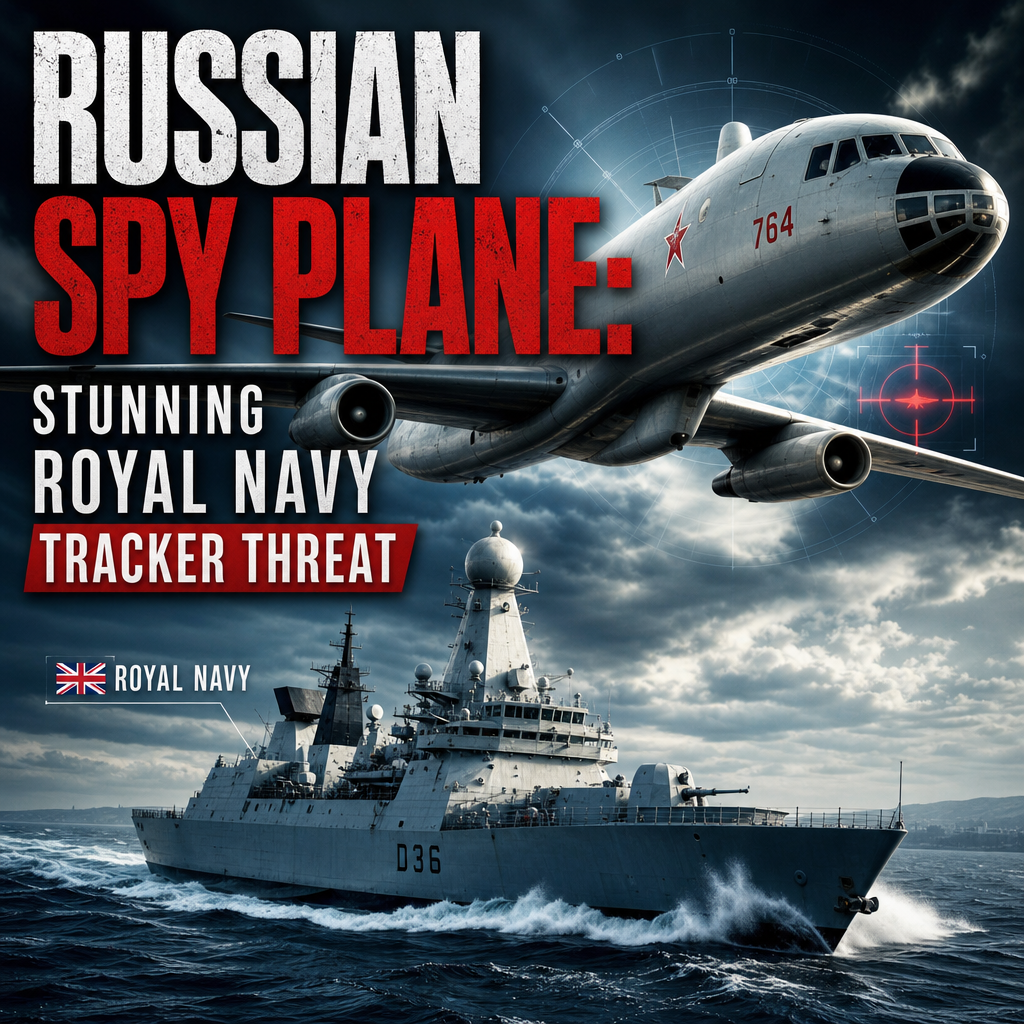
The Sky News report describes an aircraft from Russia’s military aviation operating near the Royal Navy aircraft carrier HMS Prince of Wales and its escort group, with sonar buoys reportedly released in the path of British vessels. That detail is important: sonar trackers are not random debris. They are used to detect underwater movement, meaning the act is not just a visual provocation in the air, but also a maritime intelligence-gathering move that could complicate the carrier group’s awareness of what is happening beneath the surface.



Why the Russian spy plane incident matters
At first glance, this may look like a single tense encounter between military forces that regularly shadow one another. But the broader significance is that it reflects the increasingly contested space around NATO naval deployments. Carrier strike groups are designed to project power, reassure allies, and deter adversaries. When a foreign aircraft approaches closely enough to drop sensors into their operational path, it sends a message: your movements are being watched, and your margins of safety are thinner than they appear.
That said, the incident should not be reduced to a simple story of one side bullying the other. Military aircraft from Russia, NATO states, and other powers routinely monitor each other’s exercises and patrols. Surveillance flights are not unusual, and in international airspace they are often legal. The real issue is not whether such operations happen, but how aggressively they are conducted and whether they cross from observation into reckless signaling.




The Royal Navy has not been alone in facing this pattern. Across the broader news coverage from outlets such as Sky News and Al Jazeera, the recurring theme is a world in which military encounters are becoming more frequent, more visible, and more politically charged. In that environment, even a technically lawful maneuver can be viewed as provocative if it appears designed to test a rival’s nerves or provoke an overreaction.
What sonar trackers add to the picture
Sonar trackers, or sonar buoys, are especially interesting because they suggest an intent to map or monitor underwater activity. For a carrier strike group, that matters a great deal. Surface ships are vulnerable to submarines, and navies invest heavily in anti-submarine warfare to protect high-value assets like aircraft carriers.
If the reported release of trackers was aimed at collecting acoustic information near the carrier group, it would indicate a more sophisticated intelligence-gathering posture than a simple flyover. It also raises the question of proportionality. Was this a standard surveillance maneuver, or a deliberately theatrical move intended to be noticed?
The available reporting supports caution more than certainty. We know the episode was serious enough to draw attention and that British forces regarded it as significant. But as with many military encounters, there is a gap between what one side says happened, what the other side intended, and what can be independently verified in detail. Responsible coverage should acknowledge that uncertainty rather than flatten it into a single narrative.
A clash of narratives, not just aircraft
The value of looking at multiple news sources is that it shows how these events are framed differently depending on perspective. Western coverage tends to emphasize risk, deterrence, and the danger of Russian military assertiveness. Russian state-linked or state-friendly coverage, including RT’s broader news framing, often presents the same kinds of episodes as routine monitoring, defensive vigilance, or a response to NATO pressure. The facts may overlap, but the meaning assigned to them changes dramatically.
That contrast is central to understanding the incident. For Britain and its allies, a Russian spy plane near a carrier group can look like a direct challenge to freedom of maneuver. From Moscow’s perspective, the presence of a major NATO naval asset near strategically sensitive waters may be interpreted as an encroachment that justifies close observation.
Neither framing is complete on its own. NATO exercises are meant to reassure allies and demonstrate readiness, but they can also look like pressure from the Russian viewpoint. Russian surveillance flights may be described as defensive, but they can also function as messaging tools meant to unsettle opponents. The result is a cycle in which each side’s “normal” activity becomes the other side’s evidence of escalation.
What this means for future encounters
There are three practical lessons from this episode:
– Close military surveillance is becoming a normal feature of great-power competition.
– High-value naval assets like aircraft carriers are likely to be shadowed more aggressively.
– The risk of miscalculation grows when intelligence-gathering turns into brinkmanship.
The most worrying part is not necessarily that such incidents happen, but that they are increasingly part of an atmosphere where trust is minimal and symbolism matters as much as capability. A dropped sensor, a close pass, or an unexpected maneuver can trigger confusion in a context where both sides are primed to read hostile intent.
For the Royal Navy, the incident underlines why carrier operations are always accompanied by layers of protection, monitoring, and anti-submarine readiness. For Russia, the event fits a wider pattern of signaling that it can watch NATO deployments in real time. For the public, it is a reminder that modern naval rivalry is not just about ships on the horizon; it is about information, detection, and the constant contest to see without being seen.
The bigger strategic picture
The broader takeaway is sobering. This is not a one-off theatrical flourish, but part of a sustained pattern of military competition that is becoming harder to manage. In a period of strained East-West relations, each new encounter risks hardening assumptions on both sides.
There is no easy fix. More communication can reduce the danger of accidents, but it will not eliminate the underlying rivalry. Stronger deterrence may reassure allies, but it can also feed the perception that pressure is the only language being heard. That is the core dilemma: surveillance is lawful, but the line between watching and warning is thinner than ever.
If this latest Russian spy plane episode proves anything, it is that modern power projection is as much about nerve as it is about hardware. And when a carrier group, a reconnaissance aircraft, and submerged waters all become part of the same contest, the margin for error gets very small indeed.